Dexpanthenol - What is it and what does it do in cosmetics?

What is Dexpenthenol?

Dexpanthenol, D-panthenol or simply panthenol, is the provitamin, the vitamin B5, the pantothenic acid. It is used in medicine and cosmetics [1].

Fig. 1 The structural formula of dexpanthenol

What is panthenol chemical?

Panthenol belongs to the group of polyols, substances which possess several -OH groups, and the amides, those substances which have an R-NH-R bond. It is the provitamin, the predecessor of vitamin B5, pantothenic acid, which is an important component of coenzyme A, which in turn is responsible for the "activation" of alkanoic acids, and thus participates in the construction of many important substances in the body[2].

What are its properties?

Panthenol is a viscous, clear, liquid at room temperature. It increases the moisture retention capacity of the skin, improves its elasticity, and supports the regeneration of skin cells. It also has anti-inflammatory and wound healing properties. It is generally very well tolerated, but in some cases may cause irritation, redness and contact allergies [3].

Where is panthenol used?

Panthenol is used in medicine, in wound remedies, as well as ointments, as it contributes positively to healing, and reduces redness. It also has laxative properties in intestinal paralysis. In cosmetics, it is used in creams and shampoos to moisturise the skin and hair and protect it from environmental influences [4]. Studies have found that UV rays reduce fatty acid production in the skin by using panthenol to counteract this effect by stimulating the skin to produce fatty acids [5].

Sources:

Wikipedia[1][2]

Article of the medical journal on Dexpanthenol[3][4]

Scientific article on the reduction of fatty acid production by UV rays[5]

Image sources: Wikimedia Commons, Flickr. The image rights go to the owners of the images.

Microplastics - What is it and what does it do in cosmetics?

What is microplastic?

As a microplastic called plastic particles smaller than 5mm. They are difficult to biodegrade and are abundant[1].

How does microplastics come about and what are its properties?

Microplasticity is caused by embrittlement of plastic, by UV rays, and its mechanical abrasion. However, they are also produced intentionally, e.g. For cosmetics, such as toothpaste and shower gel. Their characteristics are the sculptures they spring from, i.a. Polyethylene (PE) and polypropylene (PP). However, they share some properties, e.g. their poor biodegradability, and their adsorption capabilities (the ability to accumulate other substances). Microplastic arises, according to a Lower Saxony declaration, with the three main origins, from rubber tires abrasion, production and transport losses and artificial turf abrasion. They also occur in food, by abrasion of plastic packaging, but also seemingly plastic-free containers such as glass have u.a. Plastic lubricants on [2].

Why is microplastic a problem?

Microplastic is not toxic to humans, which is why it is allowed (or was in countries), but it is harmful to the environment. It is very difficult to biodegrade and can therefore persist for a long time in the environment and in fish. Due to its adsorbing abilities, the plastic causes bacteria and toxins, which are carried along with it. It triggers stomach irritation and a lower energy budget in lugworms, which means that they no longer carry so many nutrients to the surface. Bacteria also settle on them, which, if they come in water treatment plants, can lead to serious problems for the water supply. Steps were taken against microplastics following the G-20 meeting in June 2017. The use of microplastics in cosmetics has been banned in the US since July 2017, and the UK is the first European legislator to ban it in toothpaste and shower gel. The federal government has been calling for a European ban for some time [3].

Why is there microplastic in cosmetics?

In cosmetics microplastics is used as consistency regulator. They give the product a certain smoothness and a good feeling on the skin. They are also used because of their mechanical properties as particles in peels, this they should remove coarse dirt from the skin by removing it, and scrub the skin a little coarser.[4]

Are there alternatives to microplastics?

Yes, it does, for a long time, biowaxes, e.g. The Cernauba wax, used in cosmetics. It comes from the Cernaubapalme, which grows in Brazil, has a yellowish color, is hard and brittle, and possesses the highest melting point of all natural waxes with 80-87 ° C. In addition, it contains no fragrances, which is important for allergy sufferers[4].

Sources:

Wikipedia[1][4]

Report on the effects of microplastics on lugworms[3][4]

Federal article on microplastics[2][3]

Saponins - vegetable soaps in cosmetics?

What are saponins?

Saponins are phytochemicals found in all higher plants. The name derives from the lat. Sapo - soap. They are due to many possible carbohydrate structures as a variety of substances before[1].

What are saponins chemically?

Fig. 1 The structural formula of gypsogenin, a triterpene saponin. It comes u.a. in soapwort.

Saponins are glucosides (sugar esters) of steroids, steroid alkaloids (nitrogenous steroids) or triterpenes. They can be divided into a large number of subcategories, with many analogues possible due to a wide variety of backbones, sugars and ester positions[2].

What are their properties?

The saponins are abundant in higher plant species, e.g. in soy, chickpeas, peanuts, spinach, tea, ginseng and quinoa. They are called saponins because of their ability to form stable foams when shaken with water. These foams show modes of action similar to those of detergents. They serve plants as protection against predators and fungal infestation. They also affect membrane permeability (cell permeability) and complex (bind) cholesterol. In addition, they have hemolytic activity, ie the ability to red blood cells to solve and possibly destroy. They also have fortifying, anti-inflammatory and hormone-stimulating properties. Due to their ability to dissolve red blood cells, they must not enter the blood[3].

What are their applications?

Saponins have long been used as a detergent, and even as a moderate cure for syphilis. Nowadays they are used as auxiliaries, as so-called QS-21, in medicine. QS-21 enhances the response of the immune system to antigens, and is obtained from Quillaja[4].

What do saponins do in cosmetics?

In der Kosmetik werden Saponine als Biotenside und Schaumbildner benutzt. So finden sie in Naturshampoos Anwendung. Oftmals werden Soja Saponine verwendet, aber auch Quillaja (Quinoa) Saponine werden eingesetzt. Sie wurden eine lange Zeit ignoriert, da man befürchtete, dass sie aufgrund ihrer hämolytischen Aktivität für Reizungen sorgen würden. Nun werde sie jedoch genau für das Gegenteil, also sehr empfindliche Haut, eingesetzt, so z.B. für Augen und Dekolletee[5].

Bio Shampoohttps://safeas.de/shampoo-ohne-parfum

Sources:

Wikipedia[2][3][4]

Report on saponins in cosmetics[1][5]

Image sources: Wikimedia Commons, Flickr. The image rights go to the owners of the images.

Metals in cosmetics - Which ones are suitable?


What are metals?

Metals are a group of elements that share very specific properties. Such are e.g. Their high electrical conductivity and thermal conductivity, their relatively good ductility and metallic sheen[1]

Why are metals like they are?

In contrast to all other elements, metal atoms have no fixed places for electrons. They have a so-called lattice structure in which their nuclei (equipped with protons and neutrons) have fixed places, but their electrons are freely movable (also called delocalized). Electricity is only the movement of the electrons in the material, and their freedom to move determines the conductivity of materials (this is described by the quantum mechanical band model). Likewise, thermal energy is only the movement of particles at a certain interval, which also has to do with the free mobility of the electrons in metals. In addition, these electrons can also emit radiation of any wavelength up to the X-ray radiation, which explains its brilliance[2].

Which metals are suitable for cosmetics?

Suitable metals are all alkali, alkaline earth, and transition metals in question. These are:

Aluminum, beryllium, bismuth, lead, cadmium, chromium, iron, gallium, gold, indium, iridium, potassium, cobalt, calcium, copper, magnesium, manganese, molybdenum, sodium, nickel, osmium, palladium, platinum, mercury, rhodium, Ruthenium, silver, tantalum, titanium, uranium, vanadium, tungsten, zinc, tin and zirconium to name the most important.

You can exclude:

Lead, cadmium, nickel, mercury, beryllium, cobalt and vanadium, as they are toxic, and uranium because it is radioactive.

Also:

Indium, iridium, rhodium, ruthenium, tantalum, palladium and platinum, since these are extremely rare. Gold and silver too, but not so rare

The rest are therefore:

Aluminum, bismuth, chromium, iron, gallium, gold, potassium, copper, magnesium, manganese, molybdenum, sodium, osmium, silver, titanium, tungsten, zinc, tin, potassium, calcium and zirconium.

Aluminum(Al)

Bismuth(Bi)

Chromium(Cr)

Iron(Fe)

Gold
(Au)

Potassium (K)

Magnesium(Mg)

- Third most common metal

- Occurs rarely as a pure element

-Good conductor

-Light metal

-Slight toxicity for humans

-Slightly radioactive

-Does occur as a pure element

-Bad conductor

-Has the strongest "Hall-Effect"

-Only occurs as a pure element rarely

-Chromium3+ is thought to be involved in the metabolism of carbohydrates

-Very common element

-Rarely as a pure element

-Essential for humans

-Moderately good conductor

-Quite rare

-Occurs mostly as a pure element, as it is quite unreactive

-Very soft

-Very good conductor

-Is used colloidally in medicine

-Only occurs naturaly as a cation

- Doesnt have any significant uses as a pure element

-Essential for humans

-Doesnt occur as a pure element

-Is quite lightweight

-Essential for humans

Manganese(Mn)

Molybdenum(Mo)

Sodium(Na)

Osmium(Os)

Silver(Ag)

Titanium(Ti)

Wolfram(W)

-Quite common element

-Doesnt occur as a pure element

-Essential for humans

-Acts as a neurotoxin

-Very hard

-Essential for humans

-Quite common

-Doesnt occur as a pure element

-Quite lightweight and soft

-Essential for humans

-Very rare element

-Occurs naturally because of its unreactivenes

-Very expensive

-Has the highest density of any element

-Doesnt have any industriall use

-Rare, yet about 20 times more common than gold

-The single best conductor

-Very soft

-Acts antibacterial in colloidal form

-Accumulative poison

-Very common metal

-Forms a very resiliant oxide layer

-Highest melting and boilingpoint of any element

-chemically resistant to most things

Zinc(Zn)

Zink(Sn)

Calcium(Ca)

Zirconium(Zr)

Gallium(Ga)

Copper (Cu)

[3]

-Quite common

-Unreactive due to an oxide layer

-Essential for humans

-Quite common

-Unreactive due to an oxide layer

-Non-toxic even in high concentrations

-Quite soft

-Very common element

-Essential for humans

-Quite common

-Quite soft

-Unreactive due to an oxide layer

- Non-toxic even in higher concentrations

- Quite rare

- Doesnt occur as a pure element

-Very low melting point

- Acts irritating on skin, eyes and respiratory system

- Quite common element

- Acts antibacterial

-Second best conductor

-Occurs as a pure element

Now, one must remember that many metals are usually not kept as metals, but are found by environmental influences or their own reactivity as compounds. Accordingly, such compounds are no longer metals and must be excluded. Even oxide layers, thin layers of metal oxide, which surround the metal are excluded, since this oxide layer reduce their intrinsic properties and reactivity. The following are left over: iron, gold, magnesium, molybdenum, osmium, silver, tungsten, copper and chromium.

In addition, these metals are used as powders and not as solid blocks or sticks in cosmetics, and therefore some of these metals precipitate again because they are more reactive in powder form. Thus remain: gold, molybdenum, osmium, silver, tungsten and copper. Already used are gold and silver nanoparticles, where silver has an antibacterial effect and gold is used against mental illness [4]. Molybdenum, has some important functions in the organism, and is therefore essential, but a deficiency is very rare, and almost never occurs, which is why an addition via the skin is unnecessary [5]. Osmium is a precious metal, and in addition to its rarity also to win a lot. There are virtually no applications, except for luxury items such as fountain pens or record player needles [6]. Tungsten is very resistant to environmental influences, and even strong acids and bases are unable to dissolve it [7]. Because of this, tungsten is largely excreted again, and has no physiological effect [8]. Chromium is under discussion to play a role in the carbohydrate utilization of humans, but this has not yet been proven [9]. A metal that is particularly in the eyes of the cosmetics industry, is the copper. It has antibacterial and anti-inflammatory properties, it also promotes collagen and elastin binding in connective tissue, which reduces wrinkles and makes the skin smoother and leveler. In addition, it is intended to help against gray hair by helping to produce color pigments, e.g. in melanin [10].

What is the conclusion?

There are many metals, some were not even discussed. And they have many different properties. Some are essential, and people can not live without them, and others are completely poisonous or deadly. Gold, silver and copper as metals, whether as nanoparticles or not, can really help the body.

Sources:

Wikipedia[1][2][6][7][8][10]

Article on the application of colloidal gold [4]

Article on the application of colloidal silver [4]

Article on some important trace elements [3][5][9]

Bildquellen: Wikimedia Commons, Flickr. Die Bildrechte gehen and die Besitzer der Bilder.

Flavonoids - What are they and what are they doing in cosmetics?

What are flavonoids?

Flavonoids are so-called phytochemicals, of which there are about 8000 pieces, which can all be derived from flavan. They can be found in all plants and ensure their magnificent colors[1].

What are flavonoids chemically?

Fig. 1 The flavan molecule, with labeled rings. (A) (B) -aromatic rings, (C) tetrahydropyran ring

Flavonoids are subdivided into nine subgroups:

  • Flavanols (e.g., EGCE tea)

  • Flavanonols (e.g., taxifolin larch)

  • Flavenols (anthocyanins) (e.g., cyanidin - red cabbage)

  • Chalkones (for example xanthohumol - real hops)

  • Flavonols (e.g., kaempferol - grape)

  • Aurone

  • Flavones (e.g. hesperetin - lemon)

  • Flavones (e.g., Luteolin - Olive oil)

  • Isoflavones (e.g., genistein - soy)

These differ only slightly in their structure, and are all due to the flavan, which consist of two aromatic rings and a tetrahydropyran ring[2].

What are their properties?

Weder Tiere noch Menschen, und nur wenige Mikroorganismen können Flavonoide herstellen, weshalb sie den Pflanzen vorbehalten sind. In Pflanzen erfüllen Flavonoide verschiedenste Aufgaben. Sie dienen als Farbstoff, um Bestäuber anzulocken, als Bakterizid und Fungizid, zur Abwehr gegen Fressfeinde und Pilze, und schützen die Pflanze vor UV-Strahlung. So z.B. Binden sie sich an Glykoproteine im Speichel von Fressfeinden, und machen sich somit schwerer verdaubar, was die meisten Fressfeinde abschreckt. Durch ihre stark lipophilen Eigenschaften schützen sie vor Mikroorganismen, und durch teilweise stark methoxylierende Flavonoide schützen sie sich gegen Pilzbefall. Ebenfalls sind sie gute absorbierende Moleküle für UV-Strahlen, und können dadurch viele kurzwellige Wellenlängen an Licht absorbieren[3].

What are the uses of flavonoids?

Flavonoids are widely used in pharmacy, in vitro and in vivo, due to their anti-allergic, anti-inflammatory, antibacterial, antioxidant and anti-cancer properties. As a mono-preparation, or as medicinal plants, e.g. Camomile, real hops, ginkgo, bitter orange, marigold, licorice and meadowsweet[4].

What do flavonoids do in cosmetics?

In cosmetics, flavonoids are concomitants of plant extracts. Here different concentrations, the subgroups of flavonoids serve very different uses and tasks. From anti-aging to sunscreen and preservatives, flavonoids have many benefits[5].

Sources:

Wikipedia[1][2]

Article on flavonoids and their properties[3][4][5]


Glycols in cosmetics - are they harmful?

What are glycols?

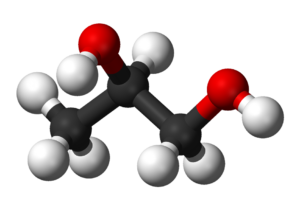
Glycols are so-called dihydric alcohols, more specifically under the name 1,2-diols. They are characterized by two hydroxide groups, and have different uses and uses[1].

Fig. 1 Rod model of 1,2-propanediol

What are glycols chemically?

The diols all have very low freezing points of -14 to -55 ° C, are usually slightly to strongly viscous, form explosive vapor-air mixtures, smell and taste sweet and have good dissolving and lubricating properties. They are characterized by two -OH groups, which makes them dihydric alcohols (di - two | -ol suffix for alcohols). They are made into polymers in the chemical industry because of their two -OH groups. Most glycols are toxic and have neurotoxic (neurotoxin) and nephrotoxic (renal toxin) degradation products, such as. Glycolic acid and oxalic acid[2].

What are glycols used for?

Glycols are used as antifreeze, coolants and deicers because of their low freezing points. They are also used as hydraulic fluids, solvents and emulsifiers in chemistry and as washing raw materials. For example, also ethylene glycol and propylene glycol, with ethylene glycol being largely replaced by its high toxicity by propylene glycol[3].

Why are glycols in cosmetics?

In cosmetics, glycols are mostly used, due to their viscosity and polarity, as emulsifiers, or carriers for antioxidants, odors or active ingredients. Often, propylene glycol and polyproylene glycol are in use because they master these tasks and are relatively non-toxic[4].

What is the problem with glycols in cosmetics?

Fig. 2 General structure of polyethylene glycol (PEG) with number n of repeating, bracketed, parts

Polypropylene glycol (PEG) makes the skin more permeable, for active ingredients and pollutants. It can help as well and hurt, which is why it is criticized. However, since it is not itself toxic, it is considered acceptable to most manufacturers and authorities. PEG can cause allergies by making the skin more permeable, it helps active ingredients to penetrate the body, but also pushes unwanted substances into the body, and that for a longer time than the cosmetic product works [5].

Are there alternatives ?

Existing alternatives do not yet exist, due to the propylene glycol, which has a very low toxicity, with all the sought after properties. It can be used as a substitute for polyethylene glycol, which makes the skin more permeable. It can also be derived from corn, is 100% biodegradable, irritates and does not redden, and does not disturb the immune system or the skin barrier[6].

Sources:

Wikipedia[1][2][3]

Scientific article for the production of propylene glycol[6]

Article about propylene glycol in cosmetics[4]

Article about Polyethylene Glycol[5]

Nanoparticles in cosmetics - are they dangerous?

What are nanoparticles?

Nanoparticles are particles that are in the range of 1-100 nanometers (nm), thus at 1 × 10⁻⁹ that is 0, 000 000 001 meters, this is one tenth of the diameter of a human hair. The name "nano" is derived from the Greek "nanos" and means something like "dwarf" or "dwarfish".

What are nanoparticles chemically or physically?

Nanoparticles may consist of different materials, and may of course be e.g. produced by volcanic eruptions in the form of ashes or synthetically in the laboratory [2]. They are divided into several groups:

  • Carbon containing e.g. Fullerene or carbon nanotube

  • Metals e.g. colloidal silver (Ag) or gold (Au)

  • Metal oxides e.g. Titanium white (TiO2) or zinc oxide (ZnO)

  • Semiconductors e.g. Cadmium telluride (CdTe) or silicon (Si)

  • Polymers e.g. Dendrimers[3]

The big difference to the properties is their mass-to-volume distribution due to their small size. They obtain completely different properties, since other forces act on them, e.g. Quantum chemical principles and the fact that mass forces are not so strong, but surface forces are stronger. The large surface gives them higher chemical reactivity, better electrical conductivity, and greater surface charge, which requires compensation. Due to this required balance, the durability of nanoparticles is very short, as they quickly reassemble into larger clusters[4].

How are nanoparticles made?

Nanoparticles are produced through complicated chemical or physical routes. For example, via chemical solutions or painting processes[5].

What are their applications?

In addition to the technical applications, it is used in medicine as a drug carrier for targeted treatment of e.g. Cancer cells application, and is used in cosmetics in sunscreens, toothpastes and antiperspirants. In addition, they are used in the food industry as a thickener and anti-lumping protection[6].

What do nanoparticles in cosmetics do?

Nanoparticles allow a wide range of applications, due to their variety of properties. For example, titanium dioxide and zinc oxide are used in sunscreens by spreading a clear film over the skin that reflects solar radiation. Nanoparticles Active ingredients quickly penetrate the skin faster than the larger particles could. And colloidal silver has an antibacterial effect, protecting it from unpleasant odors. Nanoparticles offer great properties in many ways to replace some of the worse alternatives and eliminate problems[7].

Why nanoparticles as a substitute for chemistry in cosmetics?

In cosmetics, nanoparticles serve as a substitute for chemistry. They are most commonly used in sunscreens, in which chemicals such as Enzacamen are replaced. Enzacarmen has been shown to be involved in the growth of cancer cells, but apart from titanium and zinc nanoparticles, there are no alternatives. Enzacamen absorbs a part of the sun's ultraviolet radiation, which becomes harmless to humans through the so-called Stokes shift, when it will give off again[8].

Are nanoparticles harmful?

This question has not yet been clearly proved or disproved, there simply are not enough studies and evidence for or against it. Titanium dioxide e.g. It is almost completely inert chemically, so it does not cause any damage even if it gets into the body. However, studies have shown that TiO2 is toxic in a way that is not yet detectable [9]. However, since there are no precise data for or against it, nanoparticles are to be enjoyed moderately, and to question their meaning as an ingredient. For example, titanium dioxide and zinc oxide may be harmful, but their property is more valuable than unproven toxicity to protect them from the sun's rays and skin cancer [10].

Sources:

Wikipedia[1][3]

Article on possible health effects of nanoparticles[8]

Report on the Benefits of Nanomaterials[2][4][7][6]

Article on the production of nanomaterials by nucleation[5]

Article on the effects of nanoparticles on aquatic organisms[9]

FDA's opinion on Enzacamene[8]

Image sources: Wikimedia Commons, Flickr. All image rights go to the owners of the images.

Ectoin - What is it and what does it do?

What is Ectoin?

Ectoin is a substance that is found in many bacteria, especially in large proportions in the so-called halophilic (salt-loving) species. It protects these bacteria against extreme conditions such as UV radiation, high salt concentrations or temperature fluctuations[1].

Fig. 1 The Ectoin Zwitterion

What is Ectoin chemically ?

Ectoin is a so-called cyclic amino acid, i. It is a ring shaped amino acid. Dissolved as zwitterion, the carboxylic acid being negatively charged and one of the nitrogens positively charged. This property accounts for most of the effects of Ectoin. It has a strong hydratating effect, which is transferred to surrounding molecules, so u.a. on biopolymers such as proteins and the DNA. It does not bind itself, nor does it enter the cell itself, which does not interfere with metabolism[2].

What are properties of Ectoin?

The Ectoin moisturizes through hydration, and stabilizes the structures of biopolymers. It is produced by fermentation (Fermantativ), with the help of Halomonas elongata bacteria. It is used in medicine for irritation and inflammation of the skin and mucous membranes to relieve them. It is also used in cosmetics to protect the skin from stress-related damage, e.g. UV radiation, drought or fine dust to protect. People with ectoin hypersensitivity should avoid using ectoin, otherwise side effects may occur with the exact opposite effect, including: strong burning on the skin. In biochemistry, ectoine is also used to obtain proteins, nucleic acids and other biopolymers [3].

What do ecto-containing cosmetics do and are they really helpful?

Kosmetika mit Ectoin können Falten mindern, und die Entstehung neuer vermeiden. Sie spendet der Haut Feuchtigkeit und schützt sie vor Umwelteinflüssen. Ebenfalls lindert Ectoin Hautreizungen und Entzündungen, ganz ohne in den Stoffwechsel einzugreifen. Jedoch sollten Menschen mit Ectoin Überempfindlichkeit Kosmetika mit Ectoin meiden. So empfiehlt sich vorab zu klären ob man eine solche Überempfindlichkeit aufweist, bevor man Ectoinhaltige Kosmetika verwendet. Weist man eine solche Überempfindlichkeit nicht auf, so hat Ectoin quasi keine Nachteile[4].

Sources:

Wikipedia[1][4]

Scientific article on the cell-protecting properties of Ectoin[2][3]

Antioxidants - How do you help the organism?

What are antioxidants?

Antioxidants are substances that protect the body from reactive oxygen species (ROS) by deactivating them. They are used in foods, cosmetics, medicines and consumables, are naturally present, but are also produced synthetically[1].

What are antioxidants chemically?

Fig. 1 The vitamin C (ascorbic acid) molecule

Antioxidants are molecules that deactivate free radicals (e.g., O-). This is done through one of two mechanisms. That of the radical scavenger or that of the reducing agent. Radical scavengers are chemicals that can catch radicals, but they turn into radicals themselves, but are so inert that they themselves do no harm to the organism [2]. Such radical scavengers are e.g. Vitamin E. The second mechanism is that of the reducing agent. Such reducing agents per se have a very low reduction potential (* 1). By this property they are more likely to be attacked by the radical than other molecules of the organism. Such reducing agents include vitamin C and glutathione. In addition, there are so-called synergists which aid in their action by giving antioxidants, e.g. by regeneration of the substance, or by the binding of trace elements. Such synergists are citric, tartaric and phosphoric acid, as well as their salts [3].

* 1 - The reduction potential is the voltage generated by the movement of the electrons through a redox reaction[4].

What are the properties and benefits of antioxidants?

Of course, antioxidants are e.g. in the form of vitamins A, C and E, as well as polyphenols (so-called flavonoids), but synthetic variants are also known, e.g. BHA (butylhydroxyanisole) [4]. They are used in food and cosmetics to keep these products from getting nasty. In medicines and plastics, they are used to protect against harmful by-products or decomposition products. Thus, they protect the smell or taste in foods and cosmetics, in drugs the abatement of the effect, and in plastics the change of physical properties [5]. The body can not produce enough antioxidants and therefore needs an extra intake through the food, with the first place being the coffee, with 1299mg / day. The tea in second place reaches at least 294 mg / day, which is less than a quarter [6]. However, the required amount of antioxidants should not be exceeded as there is a regulated free radical body in the body. The ROS also play an important role as signal molecules and as such are essential to the body. Excessive levels of antioxidants have serious consequences, ranging from liver damage to cancers and higher mortality rates, so a lot of antioxidants are sometimes more harmful than the radicals they are designed to protect [7].

What do anti-oxidants on the skin and what's wrong with the "anti-aging"?

So far, there are hardly any studies that clearly demonstrate a positive effect of antioxidants. Polyphenols have a proven effect on the skin, but not in vitro (from the outside) [8]. The skin aging slowing properties of antioxidants are actually easy to explain: "The idea of ​​oxidation and aging is kept alive by people who make money from it." There is a lack of scientific evidence for the cosmetic benefit / anti-aging effect, and only the by-products of plant matter in cosmetics have proven effects [9]

Sources:

Wikipedia[6]

Scientific article on the negative effects of antioxidants[7]

Scientific article on flavonoids and other active substances in plants[8]

Scientific Article on Anti-aging Myths of Antioxidants[9]

Scientific Article on Antioxidants[1][2][3][4][5]

Phytosterols and cholesterol

What are phytosterols?

Phytosterols or phytosterols are substances of the sterol group. They occur exclusively as esters and glucosides in plants, and their richest parts are fat. Structurally they resemble cholesterol, which is present in all humans and animals[1].

What are the chemical properties of phystosterols?

Phytosterols belong to the group of sterols, which is a subgroup of steroids. They are all so-called polycyclic (poly-multiple / cyclic-ring) molecules, where the phytosterols are alcohols. They are similar to cholesterol, as well as the sex hormones testosterone and estrogen. It occurs only in plants (phyto - vegetable), and there in the fat-rich parts, such as the seeds[2].

What are the properties and uses of phytosterols?

Fig. 2 The β-sitosterol molecule

Phytosterols are used to lower blood cholesterol levels, while stimulating the production of cholesterol, increasing the total amount in the body, but binding it down, which lowers the cholesterol concentration in the blood. As a negative effect, phytosterols may inhibit the absorption of fat soluble vitamins (e.g., A and E), which should prevent pregnant women, nursing women, children up to 5 years, and those with phytosterinemia from phytosterols. Phytosterols are also used medically to reduce skin irritation and itching. The most common phytosterol we ingest through diet is β-sitosterol at 65%. In cosmetics they are used as emulsifier [3]

What is cholesterol and what does it do?

Cholesterol is an important component of the cell membrane, it increases its strength and helps to guide messenger substances into the cell and out of the cell. The body also converts cholesterol to the sex hormones estrogen and testosterone. The body produces 90% of its cholesterol itself. Increased cholesterol levels can lead to heart attacks and gallstones, so a balanced diet is important to keep cholesterol levels at a healthy level. It has long been investigated whether low cholesterol levels are responsible for a higher degree of violence, poorer memory, increased levels of stress and also the frequency of nightmares[4].

Sources:

Wikipedia[1]

Report on the errors of cholesterol[4]

Scientific article of the Institute of Nutritional Physiology on phytosterols[2][3]