Metals in deodorant - How dangerous are aluminum salts?

What are aluminum salts in general?

Aluminum is a metal that we find everywhere today. In the form of foil, as cans for soft drinks and food or as a material in industry and private use. For years it has also been found in the form of metal salts in deodorants and antiperspirants. Antitranspirantien.

What are aluminum salts?

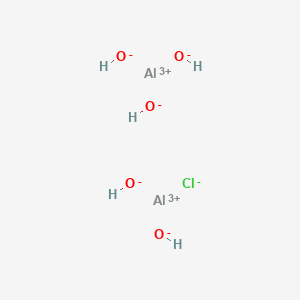
Fig. 1

Metals can undergo ionic bonding by donating one or more electrons to a suitable nonmetal partner. Electromagnetic forces now hold these partners together.[1] The most commonly used aluminum salt in deodorants is aluminum hydroxychloride (ACH).[2]

It consists of a mixture of different aluminum salts with the recurring constituents, Al (aluminum), Cl (chlorine) and OH (hydroxide).[3]

Why are aluminum salts used in deodorants?

ACH prevents excessive perspiration, reliable and long-lasting. It is relatively cheap, easy to dose and therefore has an excellent price-performance ratio. It can be used without limit, and is therefore, with many cosmetics manufacturers, very popular. In addition, there are few alternatives that fulfill this job as well as they do.[4]

What are the problems with aluminum salts?

ACH acts in two main ways:

1) It extracts moisture from the skin, thus narrowing the sweat channels of the skin

2) It partially denatures the skin's proteins, creating a film over the skin that penetrates and blocks the pores and sweat ducts.

So Aluminum salts are proven to dry out the skin and destroy proteins to counter sweat. [5]

Also, ACH is a neurotoxin, which at higher concentrations affects the blood-brain barrier, a natural barrier to central nervous system (CNS) fluid trajectories. It can damage the DNA and affect the activities of genes. [6]

In addition, they are in strong suspicion to trigger breast cancer and Alzheimer's, but this is still controversial and it is disputed whether elevated aluminum concentrations in breast cancer tissue as a trigger or even as a by-product.

The fact is, however, that larger amounts of aluminum do not stay in the body and are separated from the kidneys, and then excreted. In humans with renal diseases such as kidney hypofunction, aluminum can accumulate in the body.[9]

Are there natural and harmless alternatives?

Yes and at the same time no. There are some competitors who are harmless and gentle, but do not work comparably well with ACH. However, compromises must be made, and one's own health preceded by a slightly better performance. [9] [9]

As alternatives, there are deodorants, which reduce the acidic environment by basic minerals, and thus the growth of bacteria, and thus malodour. They also partially protect against sweat leakage. But also natural oils and extracts such as grape, coriander, pomegranate or sage help to suppress odors. With fats and waxes, such as berries and beeswax, cocoa, and shea butter, excessive sweating can be avoided, at least for the most part. [10] [10]

Sources to read:

Stiftung Warentest for testing deodorants with and without aluminum salts[4]

BfR statement on increased uptake of aluminum via deodorants[9]

Study on increasing Alzheimer's risk by aluminum uptake[7]

Description of risk factors of aluminum salt containing cosmetics[5][6][7]

Wikipedia[1][2][3][8][10]

Plastic in cosmetics - why silicone-free?

What are silicones anyway?

Silicones are so-called polymers, long chains of repeating segments. They are semi-synthetic and made from petroleum. They are available as liquids or pastes, as soft plastics or resins. However, in this article we only treat the liquid and pasty. They are non-toxic, chemically resistant and odorless. They are used in cosmetics, the food industry, in shampoos and other cleaning products, massage oils, as a basis for creams and ointments, and as a lubricant and foam reducer. [1]

How are silicones constructed and how are they made?

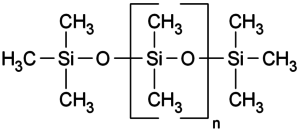
Silicones, as mentioned above, are polymers with recurring segments. Only these segments are recorded, and bounded by square brackets. These brackets are then noted the number of repetitions. Also, the tails are shown. [2]

The chemical structure of poly-dimethyl-siloxane Fig. 1

Silicones are characterized by their silicon-oxygen compounds. Of these, they can have up to four pieces (four oxygen on a silicon would correspond to quartz). These sometimes make their properties apart from the chain length. [3]

They are prepared by allowing pure silicon powder to react with methyl chloride on a suitable catalyst, at 300 ° C. Different products are separated and polymerized with each other depending on the application.[4]

Why are silicones used in cosmetics?

In cosmetics, silicones are found in the form of silicone oils. These silicone oils are touted for fake effects. They are supposed to make the skin more even, make the hair smoother and more shiny and sedate, and give creams and ointments a thicker consistency. They are often used by their effects at the first application, these being only placebo effects. [5]

Why are silicones bad for the skin and hair?

Silicones have no effect on the skin and hair, any visible "effect" is just a mirage. In fact, the water-repellent silicones only penetrate the skin and hair, penetrate and smooth out bumps, but they do more harm than good. They cover themselves as a film over skin and hair and do not let moisture in or out, the same goes for sebum and dirt. They prevent the skin and hair from getting rid of excess sebum and thus provide clogged pores. The skin dries and the hair becomes brittle. If you use silicone-containing cosmetics again, the damage they have done is only covered up, thus ensuring false security.[6] Also, some silicones are difficult to cope with the environment. Elastomers and thermoplastics (baking molds, for example) are not naturally biodegradable. Liquid silicones, such as in cosmetics, can be catalytically decomposed by minerals in sedimentary layers and subsequently converted by microorganisms into SiO22 (sand). However, this process takes decades.[7]

Why silicone-free?

Silikone bieten Scheinwirkungen und schädigen Haut und Haar, qualitative Kosmetik möchte wirkliche Leistungen und Verbesserungen bieten, und dabei so gesund und verträglich bleiben wie möglich. Hierbei bietet die Natur viele Alternativen, welche heilende und lindernde Wirkungen haben, und dabei schonend und sehr verträglich sind. Natürliche Alternativen enthalten aktive Wirkstoffe wie Vitamine und Phytosterole welche der Haut und dem Haar bewiesener Maßen helfen. So ein Öl ist z.B. das Brokkolisamenöl, welches Haut und Haare pflegt und zudem sehr leicht auf Haut und Haaren ist.[8]

Reference to source for reading

Information on silicone in cosmetics[5][6]

Broccoli seed oil as a silicone substitute[8]

Wikipedia [1][2][3][4][7]

Image sources: Wikipedia Commons. All image rights go to the owners of the images | Fig. 2 | cover photo

Surfactants in cosmetics - Why better sulfate-free?

What are surfactants actually?

The word "surfactant" comes from the Latin "tensus" and means tension. Because, in general, they reduce the surface tension or interfacial tension of liquids so much that dispersions become possible or easier.

You can represent one of four types[1]:

1. Nonionic surfactants

2. Anionic surfactants

3. Cationic surfactants

4. Amphoteric surfactants

How do surfactants work and how are they structured?

Surfactants are always the same, regardless of their type. They have a hydrophilic (water loving) head and a lipophilic (fat loving) body. In chemistry, the principle that "like dissolves in like", i. Due to their molecular structure, fats dissolve in fats and fat-like substances, they are also said to be non-polar. While water is polar and dissolves polar substances.[2] Surfactants have both polarities, they are in fat, as soluble in water. By this ability one can e.g. Dissolve sunflower oil in water by adding the right surfactant. However, the two liquids do not "dissolve" into one another, they merely become easier to mix and no longer separate into separate layers.[3] The polarity is due to the difference in electronegativity (how much the atoms want to absorb electrons). If this is not very large (e.g., C-H) then an atom is nonpolar. However, if this difference is quite large (e.g., O-H), then the atom is polarized.[4]

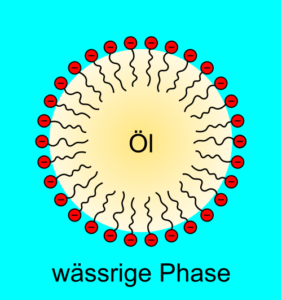
A visualization of the functionality of surfactants:

On display are the polar heads (in red with a minus to represent the polarity), with their nonpolar, fat-soluble tails. They surround an area of ​​oil (non-polar) with their tails directed to the oil, and dip their heads into the aqueous phase (polar). Fig. 1

What are the differences between the types of surfactants?

Type 1: nonionic surfactants. These are those surfactants which do not consist of anions and cations, but act on certain functional groups. With them, the electronegativities of the atoms are so great that they are very polar. Such nonionic surfactants usually have several -O- (ether) or -OH (hydroxide) groups. Most surfactants of this type are difficult to degrade or have harmful degradation products. It has been trying for some time to avoid it[5]

Type 2: anionic surfactants. Such surfactants are usually acid-base salts of carboxylic acids and strong lyes or sulfate salts of fatty alcohols. They consist of a charged head and a lipophilic body / tail. Anionic surfactants are often contained in organic, so-called core, and lubricating soaps. These are biodegradable and mainly gentle on the skin. Sulphate Saline surfactants, however, can greatly irritate the skin.[6]

Type 3: cationic surfactants. These are quaternary ammonium salts, which are a bit more complicated. With them, all four valence electrons of nitrogen are bound with one carbon. These conditions give the nitrogen a positive charge which is balanced by a suitable anion (negatively charged particle). These surfactants are biologically well degradable and have as far as possible no negative effects on the skin[7]

Type 4: Amphoteric surfactants. They contain both a positively charged nitrogen cation and a negatively charged carboxylic acid anion or a negatively charged sulfate anion. These are compensated separately by their charge ratio. The ammonium (N++) is balanced by a cation (e.g., Cl-). And the carboxylic acid or sulfate through a cation (e.g., Na++). These charges contribute to a polarity which acts in both directions, a so-called zwitterion. These surfactants are extremely skin tolerant if they are a -COOH group, less so if they have a sulphate group.[8]

Why are surfactants used in cosmetics at all?

In cosmetics, different active substances, carrier substances and bodying agents are often used. These are often not soluble in each other. Creams are designed to distribute active ingredients on the skin, and require a certain consistency, which can not be created without surfactants. Fluids and serums are designed to concentrate highly concentrated active ingredients, and are best absorbed quickly, in contrast to creams, which are mostly intended to protect and stay on the skin for a longer period of time. Shampoos, toothpaste and soaps are said to purify, condition and refresh, surfactants combine their basic active ingredients, but in addition they serve to remove fat and sebum from the skin and hair, in shampoos and soaps, as well as grind and deposits on the teeth, in Toothpastes, eliminate. Here they bind the, normaly, non-water-soluble particles with water, making it easier to remove them. Without surfactants, cosmetics like we know them would not exist with all their benefits, remedies and improvements.

An unwanted foam bath, due to the escape of extinguishing foam at an airport Fig. 3

Why is there "good" and "bad" within the surfactants?

To say something is only good or bad is very short, and often wrong. Everything has its good and bad sides, our job is to assess the value and balance of these attributes. Has a lot of good sides, but a bad bad, in which one would have to compromise, so is looking for an alternative. Such alternatives are often found in nature, but not always. The highest principle is health and tolerability, in which no compromises are made. Following these two aspects, compromises are made against diminished performance. Or simply to love the health, we renounced to outrageous benefits.

Where you can say no and why?

Surfactants have some aspects as shown above, which also have some effects and side effects. The type 1 surfactants are often poorly biodegradable and more skin tolerant. With the exception of the polysorbate alkylglucoside, which is derived from sugarcane derivatives. The polyalkylene glycol ether e.g. belongs to one of the more dominant nonionic surfactants, the fatty alcohol ethoxylates. They are made using ethylene oxide, which is a descendant of the petroleum industry. [9] Those of type 2 are moderately to good skin-friendly, and biodegradable, with the exception of sulfates, which are very skin incompatible, and not only damage sensitive skin, but can also cause irritation and allergies in people without a history. The Type 3 are difficult to biodegrade, and moderately tolerated by the skin. And those of type 4 are well tolerated by the skin and moderately biodegradable. [11] What to look out for is that you can not make a precise difference between natural and synthetic. Many of these products are considered natural because they occur as such or their educts are of natural origin. One should watch what is sold as natural, because not everything is natural is also always good. Of course, sulfate salt surfactants are harmful in the long run.

Why are sulfate surfactants used at all?

Sulfate surfactants have excellent properties, sometimes foaming and the generation of stable dispersions. They are relatively cheap and can also be used in so-called "hard water" without losing their efficiency as the e.g. Sodium salt surfactants do. The trace elements in water, magnesium and calcium form insoluble salts that have no surfactant properties and can also deposit as lime.[13]

What is the problem with sulfate surfactants?

Sulfate surfactants are irritating, irritating and they can cause allergies. They not only remove grease and dirt, but also healthy skin, making them more susceptible and permeable. Also, these types of surfactants affect the proteins of the skin by denaturing them, i. The proteins, which are long chains of hydrocarbons, amino acids, carboxylic acids as well as sulfates and sulfides, are composed in very precise forms, which is done by intermolecular forces. These forces can be overcome by environmental influences, and thus the protein can be deformed. [14] The best example is a common fried egg, in which the proteins of the liquid and transparent albumen are deformed by heat, and thus become solid and opaque protein. These processes are often difficult to undo, so it is not possible for a chef to "fry" an egg. Chemically it is possible, and our body does it, but this process takes time. [15] The resulting problem is simply explained. Our body is a finely tuned machine, and largely robust against environmental influences. However, for a normal and controlled process many components must harmonize with each other. A deformed protein is like a broken piece in a puzzle, it can not work properly and this whole process is disturbed, such. Supplying the skin with nutrients, or defense against pathogens. This makes the skin more susceptible to redness and irritation.

Why do we only use sulfate-free surfactants?

Ihre irritierenden Eigenschaften und Langzeit Beeinflussung der Haut finden in qualitativer Kosmetik wenig Begeisterung, zumal es viele Alternativen aus der Natur gibt, welche sehr ähnliche positive Aspekte besitzen, und um einiges Verträglicher für die Haut sind. Ebenfalls werden derartige Tenside nicht so gut von der Umwelt abgebaut wie solche, welche der Natur entspringen.[16] Alkylglucoside aus Zuckerrohr oder natürliche Natriumsalze der Fettsäuren von natürlichen Fetten wie Kokosfett, Kakao- und Sheabutter z.B., um ein paar davon zu nennen.

References to the source:

Information on sulfates in cosmetics [13][15][5][6]

More about sodium lauryl sulfate [10][12]

Denaturation of Proteins Explained [15]

Wikipedia [1][2][3][4][7][8][9][11][14][16]

Quellen: Wikipedia 

Erdöl in Kosmetika – Warum immer häufiger ein no-go ?

What is petroleum anyway?

Petroleum is a natural product consisting of long-chain hydrocarbons, sulfur and sulfur compounds, metals and rocks [22]. It arises when organic material e.g. Plants or animals in the upper crust are exposed to elevated pressures and temperatures. Today's crude oil mainly consists of so-called dead marine creatures, microplankton, algae and small animals, which can only be seen under the microscope [21]. It is extracted from rock layers, refined and passed on to consumers. It has been known to us humans for more than a thousand years, under the name of Petroleum, which is composed of the Greek words petra - rock / rock and oleum - oil, which is why it is also called rock oil.

How is oil produced?

Crude oil is formed when dead marine minerals in the upper crust are compressed and heated. It converts the carbohydrates, proteins and lipids contained in the animals into long-chain hydrocarbons. The more pronounced the factors of pressure and temperature are, the more the composition of the crude oil changes. From a temperature of 60 ° C arise in some cases short-chain hydrocarbons such as gaseous methane (also called marsh gas), ethane (which is used as a heating agent), propane and butane (which are contained in gas burners), but also liquid pentane, hexane, heptane and octane which are used as fuels for cars, for heating and for energy production. Between 120-130 ° C arise for the most part, and from 200 ° C arise only short-chain hydrocarbons.

How do we get oil?

The oil is in the upper crust of the earth, which is why we need to drill afterwards. This happens in three stages:

1. The hole

The primary extraction, which uses the natural pressure of oil deposits to bring oil to the surface.

2. The pumping

The secondary production, where water or gas is pumped into the borehole to get petroleum residues to the surface

3. Collect the remains

The tertiary promotion, this steam, polymers, CO2 or chemicals are used to get hold of last remains in the occurrence.

Also drilling rigs are used for sea drilling, these act on the same principles.

What are the problems with oil and its gathering?

Oil production releases vast amounts of greenhouse gases while pumping chemicals and non-biodegradable plastics into the soil and thus into our groundwater. Greenhouse gases such as methane are released by the extraction and refining of crude oil. Sulfur-containing crude, e.g. releases large amounts of SO2 (sulfur dioxide), which in the atmosphere is converted to sulfurous acid and sulfuric acid, which manifests itself as "acid rain". In addition, there are often petrol disasters that irreversibly affect the environment. Leaking oil from drilling rigs, or sinking cargo ships carrying tons of oil on board, released about 100,000 [1] thousand tons of oil into our seas each year. This has catastrophic consequences for the entire planet. The best example of this is the "oil spill" in the Gulf of Mexico, which resulted in follow what still noticeable on the Mississippi delta.


Why is petroleum used in cosmetics?

Mineral oil derivatives are used as a base in oils, petrolatum and waxes. They are inexpensive, can be processed in consistent quality, and do not trigger allergies. However, they contain so-called Mineral Oil Aromatic Hydrocarbons, MOAH's short[2].

What consequences do oil-based cosmetics have?

One of the big problems with oil drilling is the fact that radioactive particles, metals and heteroatom compounds, as well as MOAHs, are carried with oil. Long-chain hydrocarbons have little effect on the human body, both positive and negative, but these contaminants already. Metals are among iron, copper, nickel and vanadium. Nickel and vanadium are KMR substances [3], which means they are:

- carcinogenic,

- mutagenic,

-or reprotoxic

Heteroatoms are those organic compounds which have one or more non-carbon (C-C) or hydrogen (C-H) compounds. Such are with under:

Oxygen: Alcohols (such as ethanol for drinking, but also methanol which causes blindness [4]), carboxylic acids (for example vinegar), ketones (for example acetone which is contained in solvents for paints and varnishes, as well as in nail polish removers)

- Nitrogen: Amines and amides (which often smell bad, irritate or are toxic [5]), amino acids (eg, from which our DNA and neurotransmitters, such as dopamine or serotonin, exist [6]), nitro compounds (which eg used in explosives or paint strippers [7])

- sulfur: thiols (which smell horribly [8]), sulphates and sulphides (for example nickel (II) sulphate [9])

- Phosphorus: phosphanes and phosphoric acid esters (highly toxic substances [10])[10])

- Halogens: fluoro-, chloro-, bromo-, and iodoalkanes (eg carbon tetrafluoride, which is used as a refrigerant. [11] Chloroform is a poisonous, volatile liquid. [12] Bromobenzene, which is highly irritating to the respiratory tract. [13] Iodoalkanes, which release free iodine radicals (I-), which in turn attack the skin [14])

However, such particles are mostly removed, only MOAHs are still between eight (in body oils) and 15,000 (in petrolatum) times as high as in food, according to independent tests.[15]

Radium compounds such as sulfates and carbonates are also carried along with the rock. The main part of these compounds consists of the isotope radium-226 with a half-life of 1,600 years [16]. However, it is unlikely that relevant amounts are present in the crude oil. By contrast, larger amounts of slurries of radium-226 compounds are produced by the separation methods, which are often not or not properly disposed of [17], since there are no clear rules.

Another part of the petroleum, in addition to long-chain hydrocarbons, are cyclic hydrocarbons, and so-called aromatics. They differ in the fact that they form both carbon rings and hexagons, which have aromatics as distinct chemical double bonds.[18]
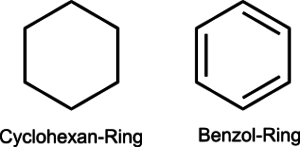
Cyclischer Kohlenwasserstoff            Aromat          Abb. 2

Hierbei ist anzumerken, dass solche Ringe meist sehr giftig sind. Cyclohexan kann dabei z.B. zu Dermatitis führen[19], während Benzen (Benzol ist ein veralteter Begriff) als Krebserregend gilt[20].

However, once a part, even a small one, changes part of a molecule, it can have a huge impact on its properties. Thus, benzene is e.g. Carcinogenic, cinnamon aldehyde, which "contains" the benzene as the major part, gives cinnamon its characteristic odor and taste, and it is quite harmless.
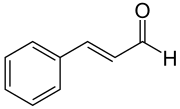
Zimtaldehyd Molekül Abb. 3

Why do not we use any petroleum-based raw materials in our products?

The facts about oil, the pollution of the environment with exhaust gases and waste, as well as the partly strongly varying ingredients are reason enough to look for alternatives. And we find that sufficient in nature. Herbal extracts and ingredients are as environmentally friendly as possible, and often work just as well, if not better and gentler than petroleum derivatives.

To love the environment, and for one's own conscience, such alternatives are the best means.en sind solche Alternativen das beste Mittel.

Source reference for reading and informing:

Radioactive oil slurries [17]

Independent consumer protection tests [2][15]

Methanol poisoning [4]

Benzen, its consequences and uptake ways [20]

KMR list of the Federal Ministry for the Environment, Nature Conservation, Building and Nuclear Safety [3]

Petroleum formation and exploitation [21] [22]

Wikipedia [1][5][6][7][8][9][10][11][12][13][14][16][18][19]

Sources: Wikipedia, Stiftung Warentest, Planet-wissen.de, Noxen.de, Federal Ministry for the Environment, Nature Conservation, Building and Nuclear Safety